by Tamiko Teshima, M.A, CCC-SLP
Practice Owner & Speech-Language Pathologist
Duncan Lake Therapy Collective
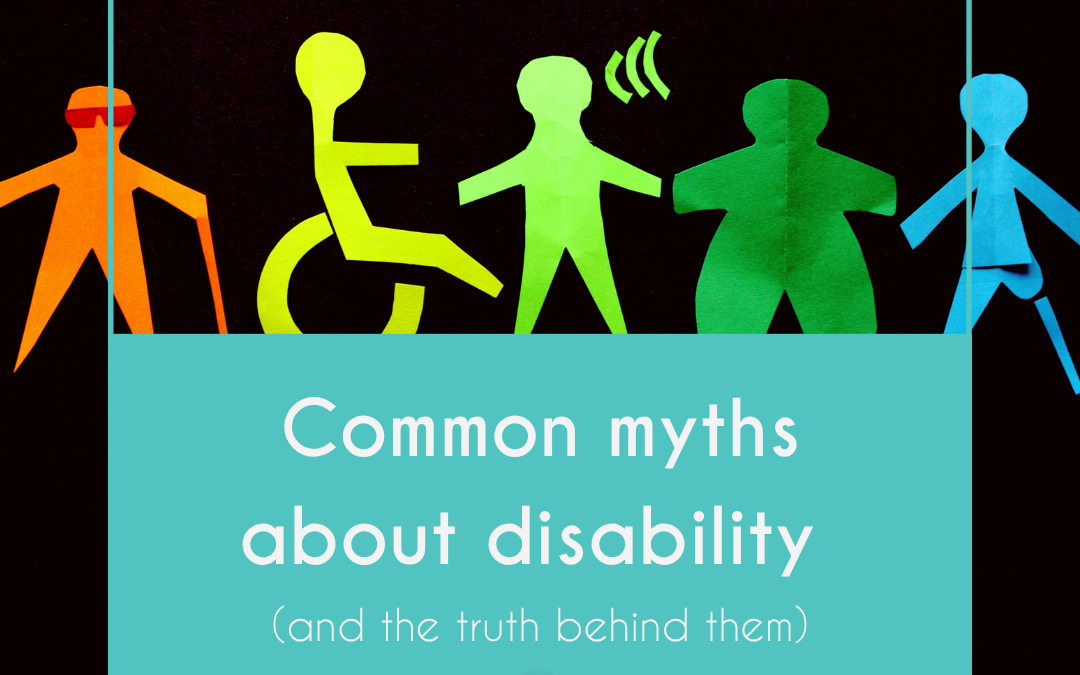
July is Disability Pride Month, a time to celebrate the diversity and contributions of the disability community. It’s also an opportunity to challenge some of the misconceptions that still exist about disability. And you know we loooove busting myths around here about AAC and speech! Many of these myths come from a place of misunderstanding and assumption. By learning more, we can all help create communities that are more welcoming, accessible, and inclusive.
Here are six common myths about disability, and the facts behind them.
Myth #1: Disability is rare.
This is incredibly false. Disability is much more common than many people realize.
In the United States, about 1 in 4 adults lives with a disability. Disability is a part of the human experience, and it can affect anyone at any stage of life, whether through birth, illness, injury, aging, or other circumstances. Think about it – if you have ever broken a bone and needed a wheelchair or wheely-scooter to get around, you had a disability.
The more we recognize how common disability is, the easier it becomes to create communities where everyone belongs.
Myth #2: You can always tell if someone is disabled.
Not all disabilities are visible. Many people live with disabilities that aren’t immediately apparent, including autism, ADHD, chronic pain, hearing loss, learning disabilities, epilepsy, mental health conditions, and many chronic illnesses. And even within those conditions, the symptoms vary widely and no two people present the same.
Because we can’t always see what someone is experiencing, it’s important to avoid making assumptions based on appearance alone.
Myth #3: Accommodations give people an unfair advantage.
Accommodations help remove barriers, they don’t provide shortcuts. Like we talked about yesterday, often times accommodations and/or modifications can help everyone.
Whether it’s extended time on a test, a wheelchair ramp, closed captions, or an assistive communication device, accommodations are designed to help people access the same opportunities as everyone else. The goal isn’t to give someone an advantage. It’s to create a more equitable playing field.
Myth #4: People with disabilities always need help.
Many disabled people live independently and know exactly what they need.
While it’s perfectly okay to offer assistance, it’s important not to assume it’s wanted. A simple, “Would you like a hand?” respects a person’s independence and allows them to decide what support, if any, they need. Respecting autonomy is one of the simplest ways to foster inclusion.
Myth #5: People with disabilities want to be “fixed.”
Every person’s experience is different.
Some disabled people seek treatments or therapies to help them achieve personal goals. Others do not view their disability as something that needs to be fixed. What many people do want is acceptance, accessibility, respect, and the opportunity to participate fully in their communities. Listening to each person’s individual goals and experiences is far more important than making assumptions.
Myth #6: Accessibility only benefits disabled people.
We’ve said it once, we’ll say it again – accessibility makes life better for everyone.
Think about curb cuts, automatic doors, closed captions, voice-to-text, or text-to-speech. Many of these features were designed to improve accessibility, but today they’re used by millions of people every day. This idea is known as the Curb Cut Effect: when we remove barriers for one group, we often make life easier for everyone. Accessibility isn’t about creating “special” features. It’s about designing spaces, tools, and communities that work for more people.
Disability Pride Month reminds us that disability is a natural part of human diversity. By challenging common myths, listening to disabled voices, and designing with accessibility in mind, we can create communities where everyone has the opportunity to participate, contribute, and thrive.
After all, when we build a world that’s more accessible, we all benefit.
Recent Comments