
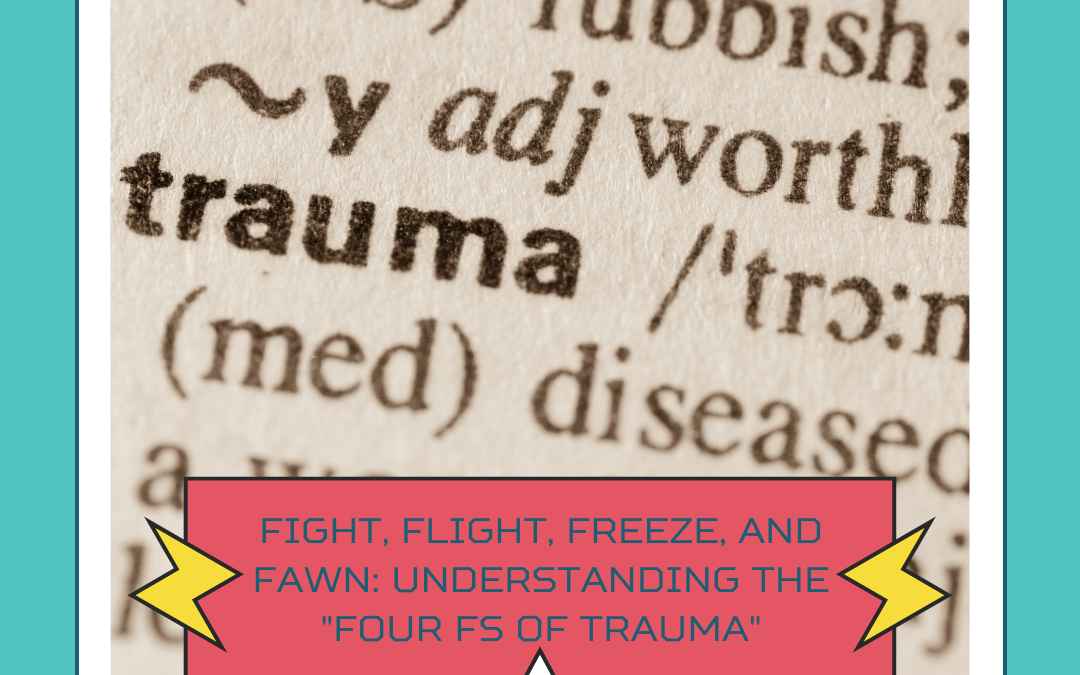
When we think about how people respond to danger, we’ve probably heard of “fight or flight.” But did you know there are other ways people may respond to threatening or overwhelming situations?
Fight, flight, freeze, and fawn are commonly referred to as the “four Fs of trauma.” These terms describe different ways people may try to protect themselves when they feel unsafe. Understanding these responses can help us recognize why people sometimes react in ways that seem confusing, even to themselves.
Why does our body respond to threats?
Our brains and nervous systems are constantly processing information about our surroundings, including potential danger. When we perceive a threat, our body’s stress response activates (heart rate, tense muscles, etc.) If you think about it, the original purpose of this response was to protect humans from imminent threat (like, you know, a giant bear hurling toward you). These reactions can happen before we’ve had time to fully understand what’s happening. For people who have experienced trauma, reminders of past danger can sometimes activate these responses even when there is no immediate threat.
Typically, there are four ways that this can show up.
Fight: Responding through confrontation
The fight response occurs when the body prepares to confront a perceived threat. This might look like becoming defensive, argumentative, angry, or irritable. For example, someone who has experienced repeated criticism or emotional harm might respond defensively to feedback, even when it’s delivered with good intentions. Their brain may interpret the interaction as threatening based on previous experiences.
Flight: Responding through escape
The flight response involves an urge to escape or avoid a perceived threat. This might mean physically leaving a situation, avoiding difficult conversations, or keeping constantly busy to avoid uncomfortable feelings. For example, someone who has experienced unpredictable conflict might feel overwhelmed when another person raises their voice. They may immediately want to leave, even when the disagreement isn’t dangerous.
Freeze: Responding by becoming still
Sometimes, when a person feels overwhelmed or unable to escape, their body may respond by becoming still or less responsive. The freeze response might look exactly that – freezing. This can show up as difficulty speaking, feeling mentally blank, becoming unusually quiet, or struggling to make decisions. For example, someone might find themselves unable to respond during a confrontation, even though they know what they want to say. Later, they may wonder why they didn’t speak up.
Fawn: Responding by trying to please others
The fawn response describes a pattern in which someone attempts to maintain safety by pleasing or accommodating others. While fawn is a commonly used term in trauma discussions, it isn’t a formally established clinical category like the more extensively studied defensive responses (fight, fight, freeze). Fawning might look like excessive apologizing, difficulty setting boundaries, agreeing with others to avoid conflict, or prioritizing everyone else’s needs. For example, someone who grew up in an environment where disagreement led to anger or punishment might learn to agree with others to feel safe. As an adult, they may continue to struggle with saying no, even in supportive relationships.
Being kind or accommodating doesn’t automatically indicate a trauma response. What matters is whether the behavior is connected to fear or a perceived need for protection.
Can someone experience more than one response?
Absolutely! The four Fs aren’t fixed personality types, and people may respond differently depending on the situation. Someone might become defensive during one conflict, withdraw during another, and freeze in a different situation. These responses can also occur in people who haven’t experienced trauma. They aren’t, by themselves, evidence of a trauma history or mental health diagnosis.
How can therapy help?
Trauma can sometimes cause our protective responses to activate in situations that aren’t actually dangerous. Therapy can help people recognize these patterns, understand what triggers them, and develop strategies for managing stress and emotions.
Through supportive, trauma-informed care, individuals can work toward feeling safer, building healthier relationships, and responding to challenges with greater flexibility.
Recent Comments